Materials board
Choose a floor, a wall, a textile and a metal. Each material comes with a short explanation: where it fits, what light does to it, what it asks of you and what goes with it.
Choose a material. The board changes.
Beside the board you will find the explanation: how to work with the material and what goes with it. These are rules of thumb, and the real samples are checked together in your home's light.
How to work with it
Light oak
- Where it fits
- Almost any lived-in room: living room, hallway and bedrooms. Especially good for spaces that should feel open and warm without feeling heavy.
- How it behaves in light
- Reflects light and widens the space. Under yellow light it warms up; in north light it looks greyer.
- Care
- A relatively soft wood, so expect small marks over the years. Felt pads under furniture legs, near-dry mopping, and no standing water.
- What goes with it
- Sand and warm-white walls, linen and bouclé, brass or matte black. With nickel it stays calm and slightly cool.
The harmony of your board
Soft warmth
Your board. Floor: Light oak. Wall: Warm white. Textile: Linen. Metal: Brass.
Light, warm materials with no heavy point. An easy direction to live with, and if you want depth, one dark point is enough. Brass and wood speak the same warm language, so they connect easily.
Floor
How to work with it
Light oak
- Where it fits
- Almost any lived-in room: living room, hallway and bedrooms. Especially good for spaces that should feel open and warm without feeling heavy.
- How it behaves in light
- Reflects light and widens the space. Under yellow light it warms up; in north light it looks greyer.
- Care
- A relatively soft wood, so expect small marks over the years. Felt pads under furniture legs, near-dry mopping, and no standing water.
- What goes with it
- Sand and warm-white walls, linen and bouclé, brass or matte black. With nickel it stays calm and slightly cool.
Wall
How to work with it
Warm white
- Where it fits
- Almost any room, especially when you want the materials and the light at the centre. Works in small rooms too.
- How it behaves in light
- Reflects light and widens the space. It is warm, not clinical, but in a room with north light it tends towards grey.
- Care
- Fairly easy to clean in a durable matt finish, yet hand marks show around switches and doors. Keep a little paint for touch-ups.
- What goes with it
- Almost everything. With walnut and velvet it lets the materials breathe; against concrete and nickel it turns cooler.
Textile
How to work with it
Linen
- Where it fits
- Curtains, cushions, bedding and chair covers. Suited to anyone who wants a calm, relaxed look.
- How it behaves in light
- Lets light through and softens it. A linen curtain filters the sun without blocking it.
- Care
- It creases, and that is part of its character. Wash gently and expect slight shrinkage if the wash is not right.
- What goes with it
- Almost everything. With oak and sand walls it is simple and light; against terracotta it gives room to breathe.
Metal
How to work with it
Brass
- Where it fits
- Handles, taps, light fittings and frames. In one room, small touches are usually enough.
- How it behaves in light
- Warm and reflective, so it adds a glint. Under warm light it looks almost like gold.
- Care
- Unlacquered brass develops a patina over time and darkens. To keep it bright, order it lacquered, and lacquer can wear away.
- What goes with it
- Oak, walnut, velvet, sand and olive walls. If the room also has nickel, choose one of the two to dominate.
How the materials work at home
Five materials from the home in the project, with rules of thumb for caring for each. You can try each one on the board.
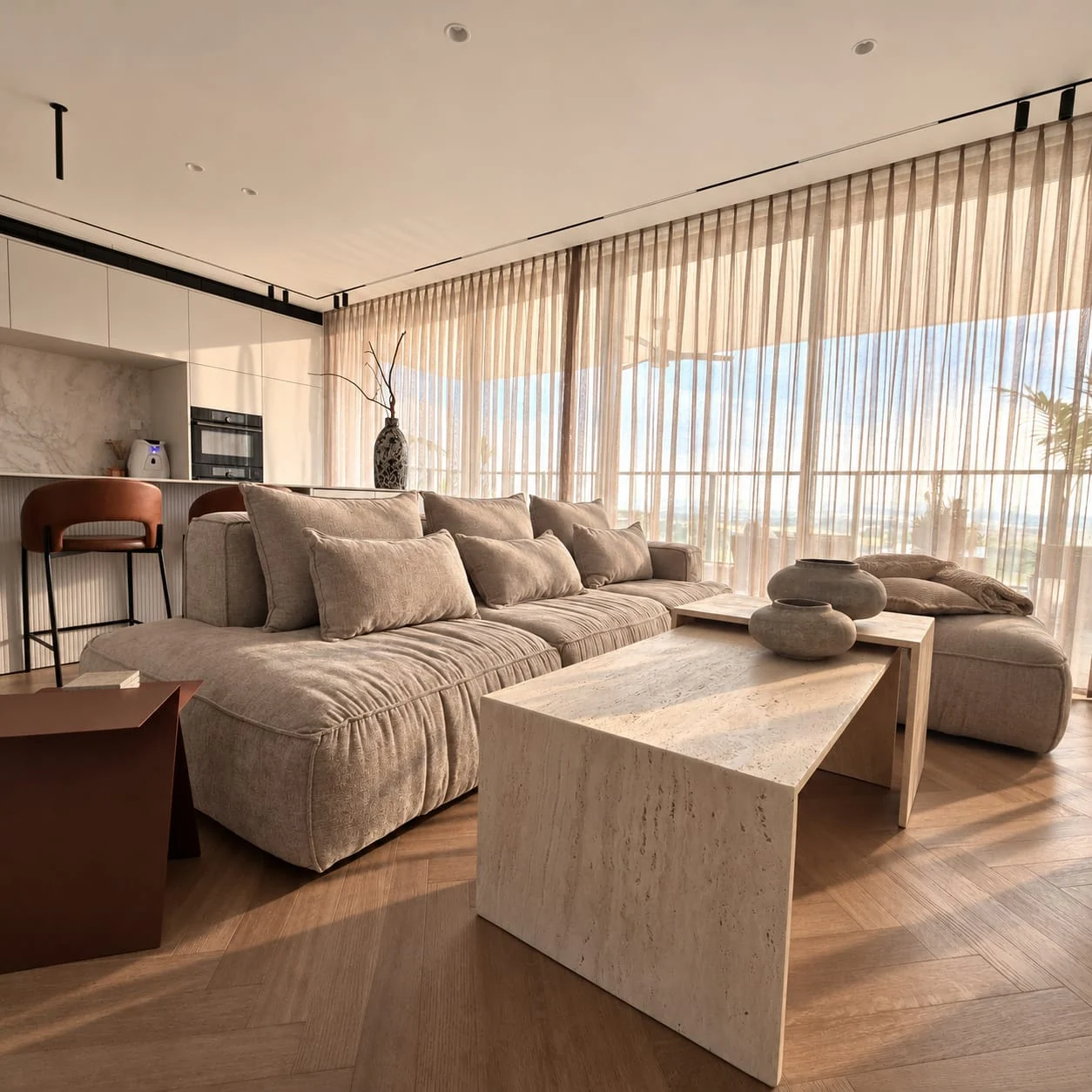
Herringbone floor in a wood toneAfternoon light from the corner windows
Floor
Herringbone in a wood tone
- Where it lives
- Throughout the shared space, from the kitchen to the dining area. One continuous floor connects the areas.
- What light does to it
- Afternoon light warms the tone and emphasises the direction of the pattern. In north light a pale wood looks greyer.
- Care
- Near-dry mopping, no standing water, and pads under the furniture legs.
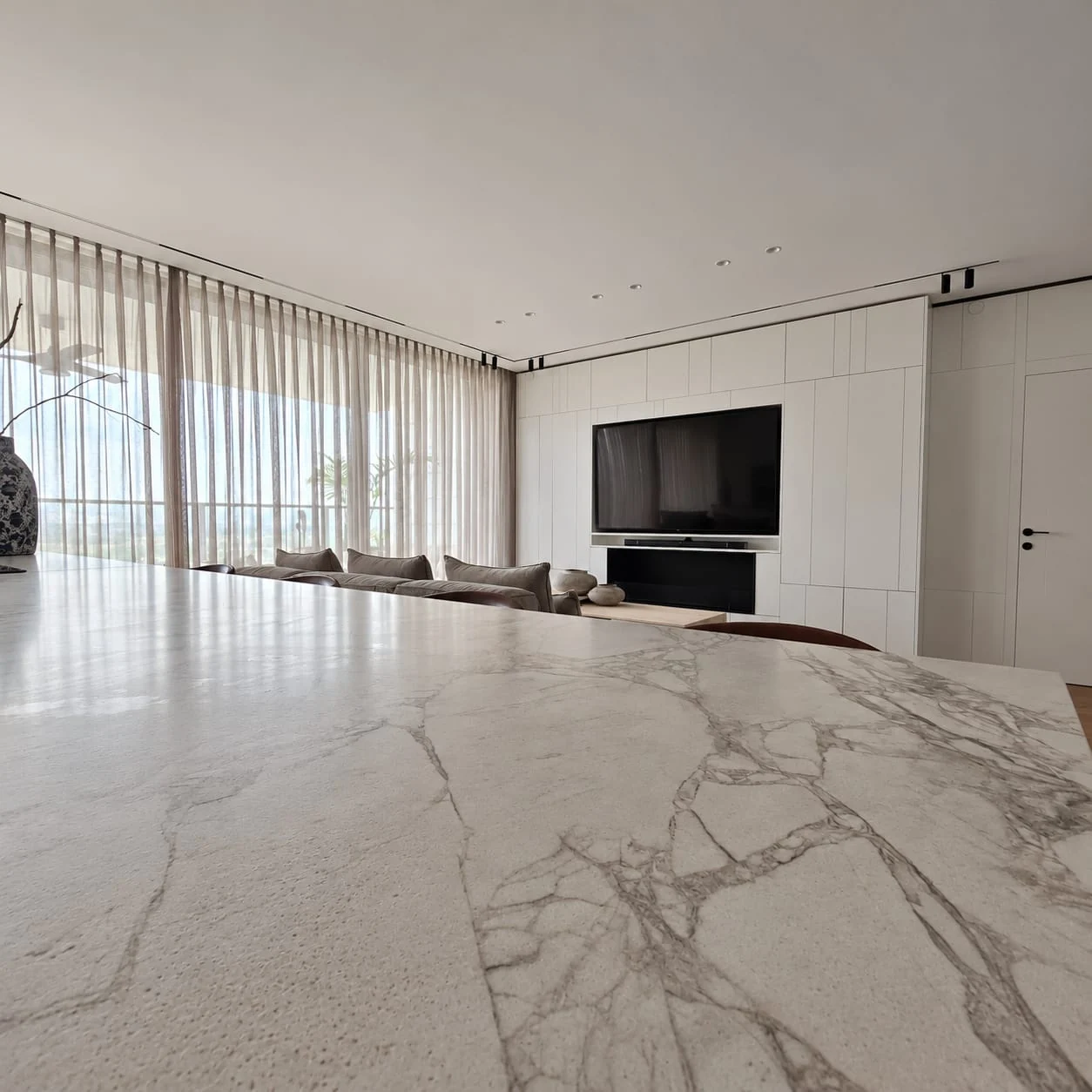
The island surface up close
Stone-look surfaces
The island surface in a marble look
- Where it lives
- The long island and the worktop: the place where you cook, eat and talk.
- What light does to it
- Window light gives a soft sheen along the island. Up close you see veins and pores that do not show in a small chip.
- Care
- A soft cloth, and clean wine, oil and acids such as lemon straight away. Ask the manufacturer which sealer suits the exact material.
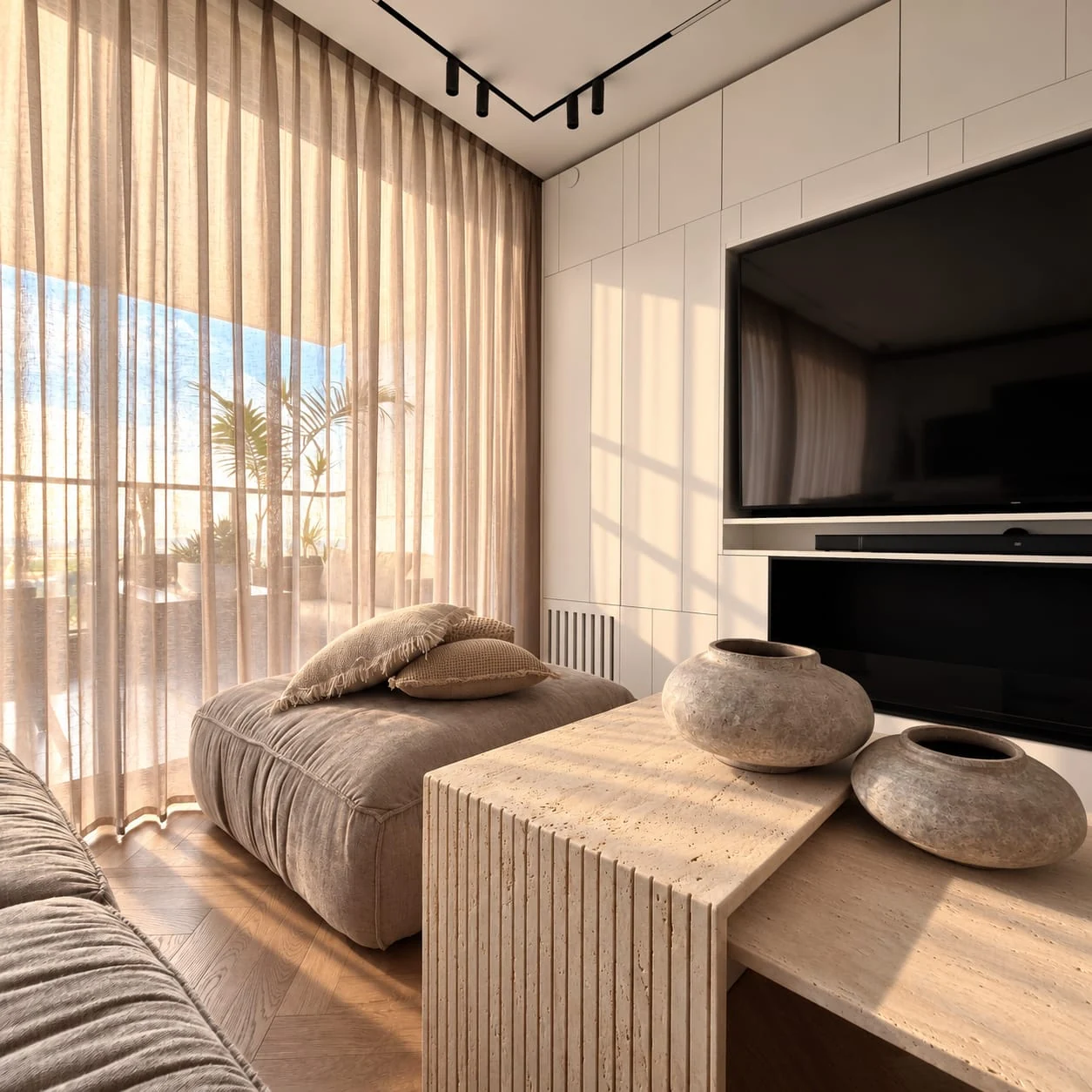
The sofa and the curtainSoft fabric against strong light
Textile
A pale sofa and sheer curtains
- Where it lives
- The sofa, the cushions and the curtains that wrap the corner windows.
- What light does to it
- The sheer curtain filters the sun without blocking it, and the soft fabric makes small shadows on the surface.
- Care
- Regular vacuuming and immediate treatment of stains. Check the fabric label before washing.
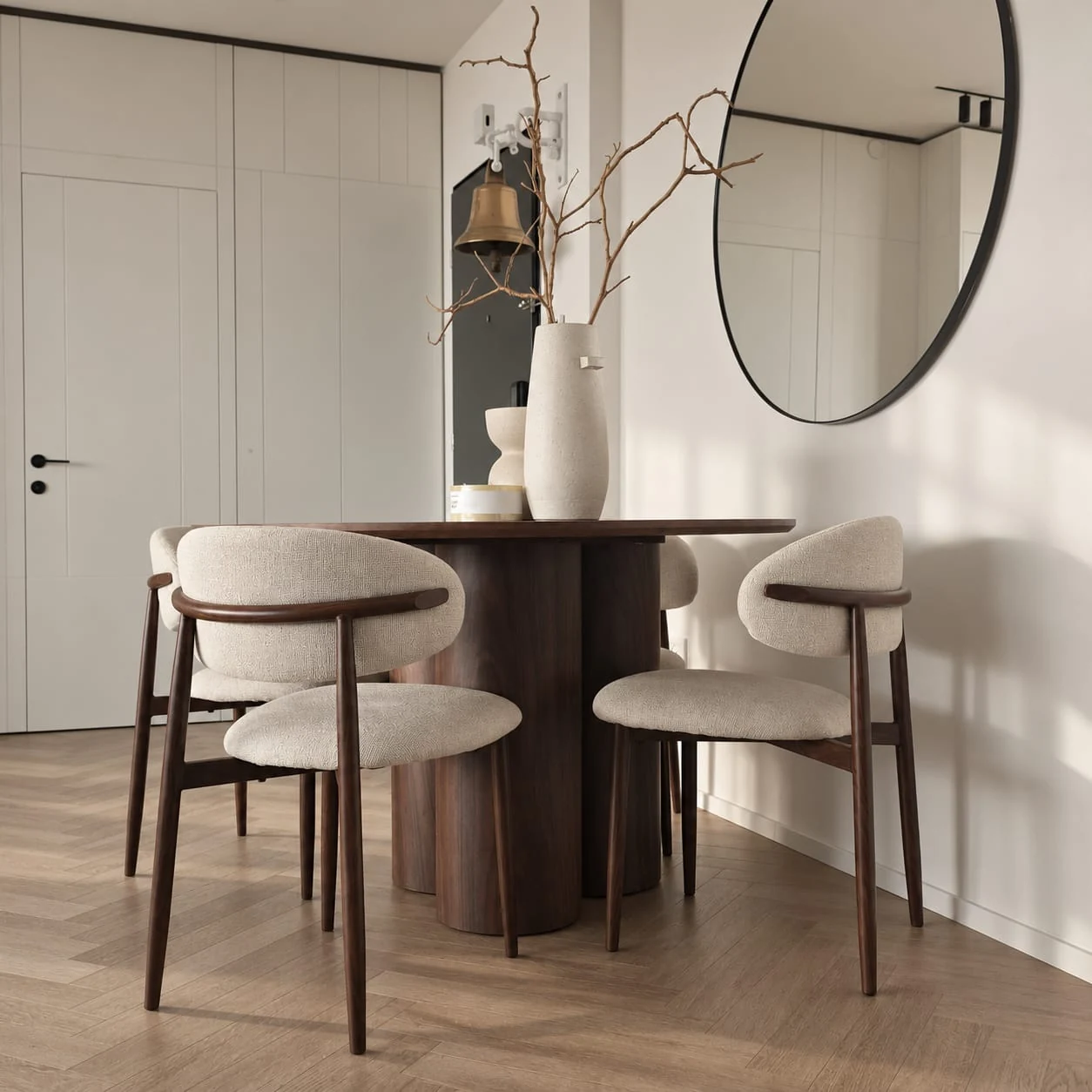
The dining area
Details
Cognac and black
- Where it lives
- The stools along the island in cognac, with the stool legs and light fittings in black.
- What light does to it
- Cognac warms in the evening light. Matte black absorbs light and gives a sharp line against the pale fronts.
- Care
- Matte black shows fingerprints, so use a soft cloth without abrasives. Clean the upholstery according to the manufacturer's instructions.
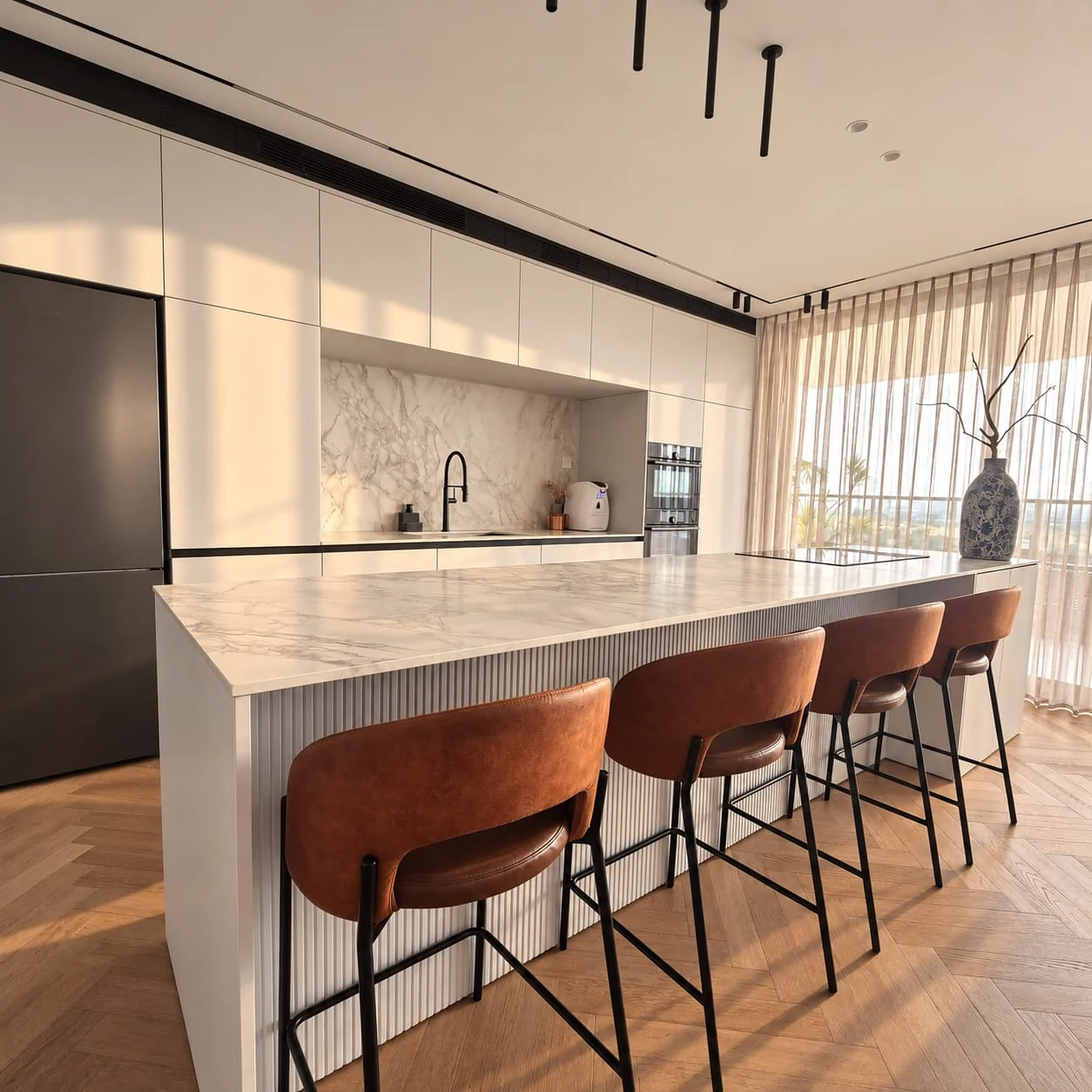
Cognac-coloured stools
Dark wood
A round dining table
- Where it lives
- In the dining area, beneath the round mirror, surrounded by upholstered chairs.
- What light does to it
- Dark wood absorbs light, so the corner feels intimate. In low morning light dust shows on it.
- Care
- A soft cloth and coasters for hot dishes. Strong sun over the years may change the tone of the wood.
Four rules that save mistakes
See a large sample
A material looks different in a palm-sized piece and on a surface several metres across.
Check it in your home's light
In the morning, in the evening and under artificial light. North light and yellow light change a tone.
Lay everything together
Samples side by side, on the wall or the floor themselves, not on a desk in an office.
Touch
A bare foot, a hand on the handle: how it feels on an ordinary day, not only how it looks in a picture.
The brief
Like the direction?
We turn it into a full brief and go through it together, room by room.
Your board
- FloorLight oak
- WallWarm white
- TextileLinen
- MetalBrass
HarmonySoft warmth
Your choices are kept only in this browser until you send an inquiry.